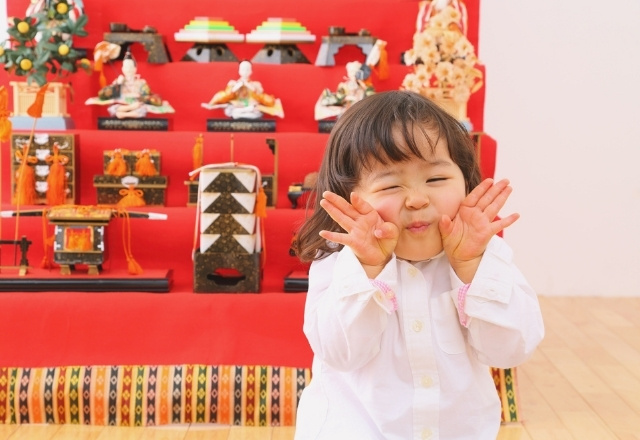
Also called Girl’s Day in Japan, Hinamatsuri is an annual celebration held on March 3 dedicated to the health, happiness, and prosperity of young girls. It is also called Peach Festival (Momo no Sekku). Families display ornamental dolls and enjoy seasonal dishes during this time. It is one of the five seasonal festivals (gosekku) that highlight important dates celebrated each year.
It isn’t as well-known in Japan as other celebrations, such as setsubun. That said, it’s still an important event for many Japanese families. What is Hinamatsuri, and why are these dolls considered a cultural treasure today?
What is Hinamatsuri?
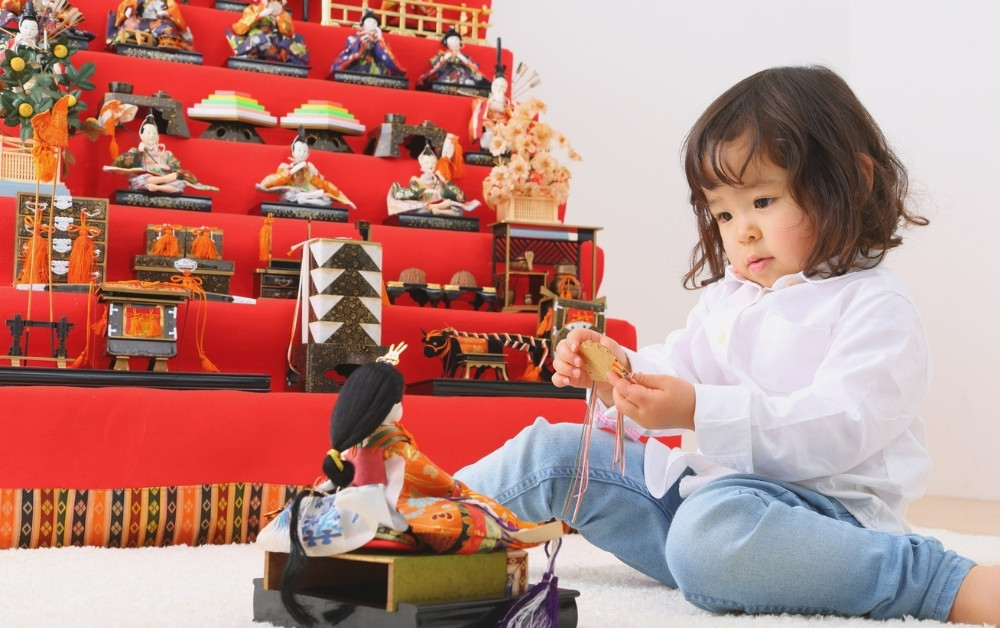
Hinamatsuri is an annual festival held on March 3. It’s a day when families pray for their daughter’s health, longevity, and prosperity. During this time, families will set up new or heirloom dolls. They’re made of ceramic, intricate in detail,l and heavy in Japanese craftsmanship. Tiered platforms, draped with red carpet, set the stage for the ornamental dolls.
The question remains: Why dolls? In Japan, dolls, called ningyou (人形), are believed to be containers of bad spirits, and the custom of displaying them dates back to the 9th century.
On odd-numbered dates and months like March 3, it’s considered the perfect time to cleanse malevolent spirits and ward off bad fortune. The dolls become a medium to store evil. Hinamatsuri is one of the five seasonal festivals in Japan, also known as sekku (節句). These events were originally brought to Japan during the Nara period from the Chinese dynasty.
Each sekku festival has its own significance, traditional offerings, seasonal flowers and plants: spring herbs, myrtle root, chrysanthemums, and bamboo. Together, they are collectively called gosekku, meaning “five main festivals”.
Sekku festivals fall on odd-numbered days. For example, the first one, oshogatsu, is on January 1, followed by Hinamatsuri (March 3), Tanabata (July 7), and Kiku Matsuri (September 9).
Initially, the Hina dolls were used as toys, but they are also used as emblems for purification rituals. Eventually, Hinamatsuri becomes a day where families pray and give thanks for their daughter’s longevity, fertility, and health.
History and Meaning of the Doll Festival
Hinamatsuri has roots dating back over 1,000 years. Believed to have originated from ancient purification rituals where people transferred their misfortunes to paper or straw dolls and set them adrift on rivers, a practice known as nagashibina.
During the Edo Period, this evolved into the tradition of displaying elaborate dolls inside the home to pray for a daughter’s healthy growth. Hina dolls are considered caretakers who protect girls from bad luck and illness. While navigating these traditions can sometimes lead to culture shock in Japan, understanding the intentions behind them and showing respect for social harmony and family make the experience much more meaningful.
Hina Doll Display (Hinadan)
The centerpiece of Hinamatsuri is the hinadan, a tiered platform draped in a red carpet (hi-mousen), which represents a grand Heian-period wedding. For students who choose to study in Japan, observing these intricate displays is a fascinating way to witness Heian-era aesthetics firsthand while practicing their language skills in a local setting.
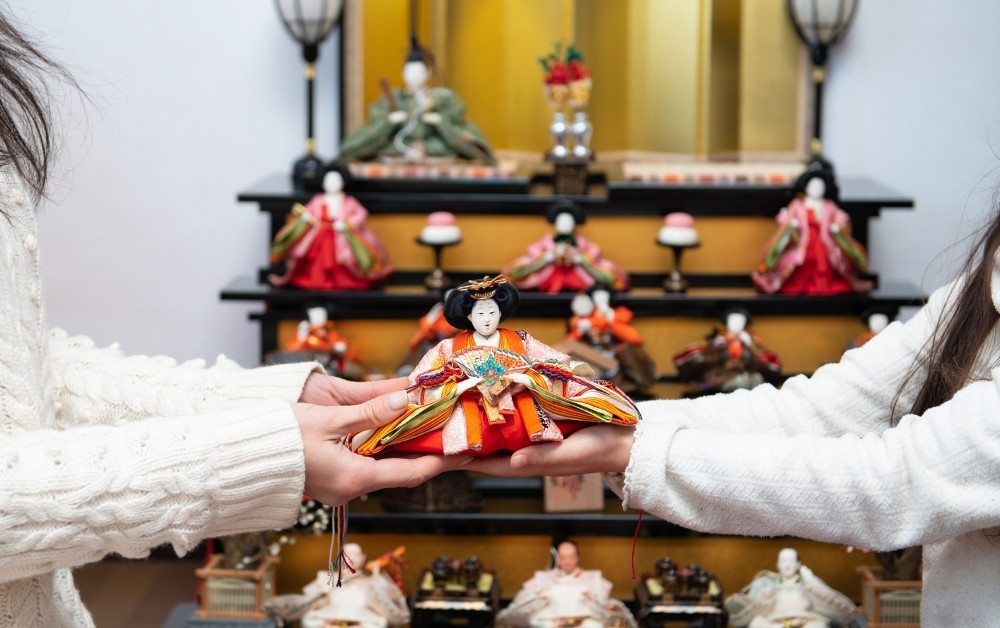
- The Imperial Couple: The prestigious top tier holds only two dolls, the Emperor (obina) and Empress (mebina), seated in front of a gold folding screen. In the Kyoto-style arrangement (kyoto-bina), the male doll is traditionally placed on the right, reflecting ancient court ceremonies.
- The Court Hierarchy: The second tier holds three court ladies (san-nin kanjo) who serve sake, followed by five male musicians (go-nin bayashi) on the third tier, each holding a different instrument.
- The Protectors and Helpers: The fourth tier features two ministers, one old and one young, who act as bodyguards, while the fifth tier displays three helpers representing different facial expressions.
- Miniature Treasures: The lowest platforms are adorned with miniature furniture, storage chests, and ox-drawn carriages (goshoguruma), often alongside artificial peach and cherry tree branches.
The ‘Late Marriage’ Superstition and Practical Storing
One of the more unique cultural quirks that can lead to a bit of culture shock for newcomers in Japan is the urgency with which these dolls are stored. Tradition dictates that the display should be put away by March 4th. Superstition warns that leaving the dolls out longer will lead to a later marriage for the family’s daughter.
Beyond the folklore, there is a significant practical reason for the hurry; the high humidity and rainy weather that typically follows Hinamatsuri in March can easily damage the delicate and expensive dolls. Because these sets are often valued as family heirlooms costing thousands of dollars, storing them immediately protects the intricate fabrics and materials from moisture and mold, ensuring they are preserved for future generations.
Auspicious Treats and Festive Food Eaten During Hinamatsuri
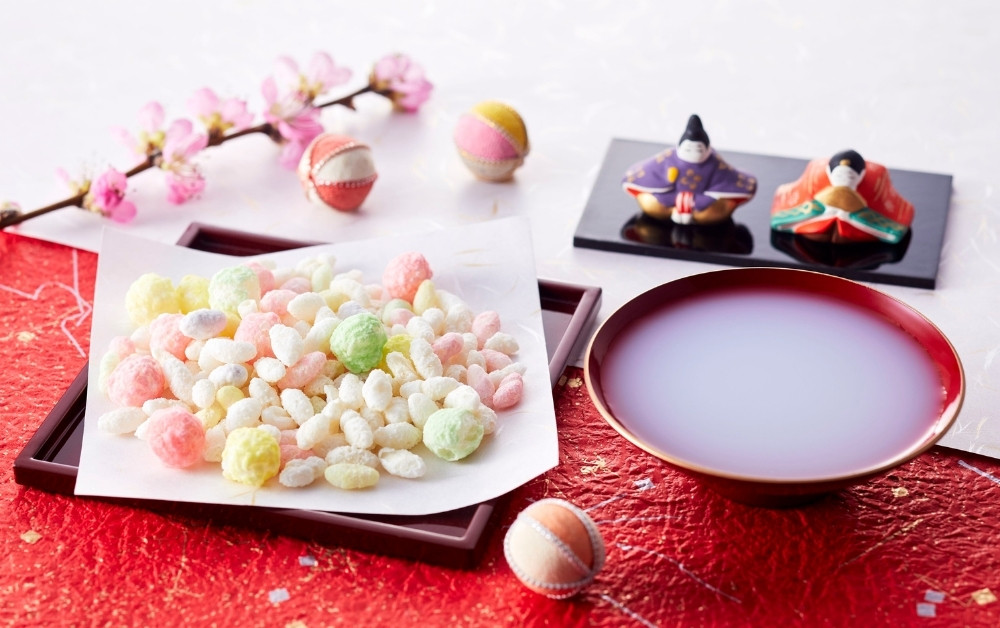
No festival is complete without food, and Hinamatsuri features several symbolic dishes. It’s customary to eat food in the colors white, pink, and green. These foods are not only delicious but are rich in seasonal symbolism, often utilizing the colors pink, white, and green to represent the arrival of spring:
- Chirashizushi: “Scattered sushi” topped with shrimp (for longevity) and lotus root (to see into the future).
- Hina-arare: Colorful rice crackers representing the four seasons.
- Hishimochi: Diamond-shaped rice cakes with three layers of color. The green layer represents spring and life; the white represents purity; and the pink represents fertility and health.
- Clam Soup (Ushiojiru): Symbolizes a perfectly matched couple, as clam shells only fit their original pair.
- Amazake: A sweet, fermented rice drink. While traditional shirozake contains alcohol, amazake is typically non-alcoholic so that children can participate. If you are a student, remember that the legal drinking age in Japan is 20.
How to Experience Hinamatsuri in Japan?
If you are looking to deepen your cultural immersion while you study in Japan, Hinamatsuri is a must-see. Much like volunteering in Japan, attending local festivals helps you build relationships with the community and understand the social values that shape the Japanese language.
Hinamatsuri provides a unique window into Japanese history, specifically the aesthetics of the Heian period (794–1185). Whether you are a student at one of the best language schools in Shinjuku or traveling through more underrated cities to study Japanese, the festival’s colors and flavors are unmistakable signs of spring’s arrival.
If you are currently in Japan or planning your trip, consider visiting these famous and popular Hinamatsuri events:
- Katsuura Big Hina Matsuri (Chiba): An incredible display of 30,000 dolls, including 1,200 dolls lined up on the steps of Tomisaki Shrine. Learn more at the Katsuura Big Hina Matsuri Official Website.
- Edo Nagashi Bina Festival (Asakusa, Tokyo): Witness the ancient tradition of floating paper dolls down the Sumida River.
- Hyakudan Hinamatsuri (Hotel Gajoen Tokyo): A stunning exhibition of rare and miniature dolls inside a historic building. Find tickets and info at Hotel Gajoen Tokyo.
- Inatori Onsen Hina no Tsurushi Kazari Matsuri (Shizuoka): Famous for intricate hanging doll decorations called tsurushi-bina. Official info: Izu Inatori Hina no Tsurushikazari.
- Iwatsuki City of Dolls (Saitama): Known as Japan’s premier doll-making area, offering workshops and exhibitions. Visit the Iwatsuki Ningyo Museum for a deep dive into the craft.
Conclusion: Start Your Journey with Coto School Finder
Understanding the deep cultural significance of festivals like Hinamatsuri and Oshogatsu (New Year) is a rewarding part of the journey when you choose to study in Japan. These traditions are a bridge to connecting with the local community and improving your Japanese fluency.
If you’re ready to move beyond being a tourist, Coto School Finder is here to help. We are a dedicated study-abroad agency that provides 100% free support for school matching and student visa applications. Whether you need a JLPT N5 study guide to meet admission requirements or a full list of documents needed for your student visa application, Coto School Finder’s got you covered.
Ready to make Japan your classroom?
- Download our free Study & Live in Japan Guidebook.
- Contact the Coto School Finder team today for a free consultation and start your adventure with confidence!
FAQ
When should I set up Hina dolls?
Displays are typically set up from the first day of spring (early February) until March 3rd.
Can I buy my own Hina dolls?
Yes! Renowned shops like Yoshitoku and Kyugetsu in the Asakusabashi district of Tokyo offer a wide variety of traditional and modern dolls.
Do I need to speak Japanese to enjoy these festivals?
While not essential, knowing basic phrases will help you navigate the food stalls. If you are just starting, check out these JLPT N5 online resources to build your foundation.
Can I work while studying?
Yes, with a part-time work permit, students can work up to 28 hours per week.