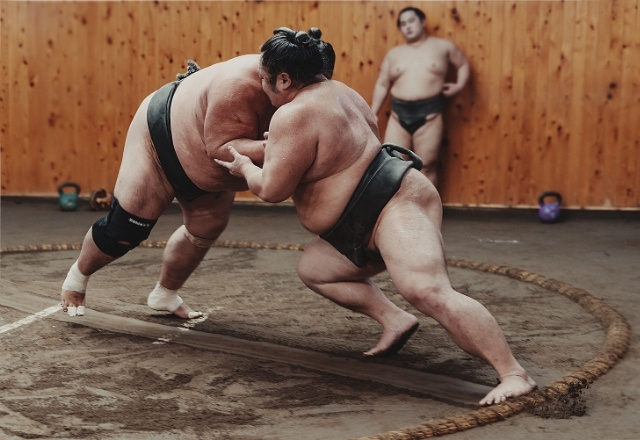
The Haru Basho (春場所), or “Spring Tournament,” is one of Japan’s six prestigious annual honbasho, or Grand Sumo Tournament, or the official sumo tournament in the country. Here, elite rikishi (wrestlers) gather to test their strength and discipline. Held every March at the EDION Arena Osaka, this 15-day event is a cultural cornerstone that blends raw athleticism with ancient Shinto rituals.
Sumo (相撲) is recognized as Japan’s national sport, but its significance extends far beyond athletics. It is a cultural phenomenon deeply woven into the nation’s spiritual fabric. From its ancient Shinto roots to its high-stakes modern tournaments, sumo offers a rare glimpse into Japan’s discipline and raw athleticism.
For those in the Kansai region, the March Grand Sumo Tournament in Osaka is one of the most anticipated events on the calendar. Whether you are a lifelong fan or a curious traveler, attending this tournament provides a front-row seat to Japan’s national sport.
What is the March Grand Sumo Tournament?
The March Grand Sumo Tournament, also known as the March Basho, is the second of six annual grand tournaments held in Japan. This event brings the world’s top-ranked wrestlers to Osaka to compete for the prestigious Emperor’s Cup.
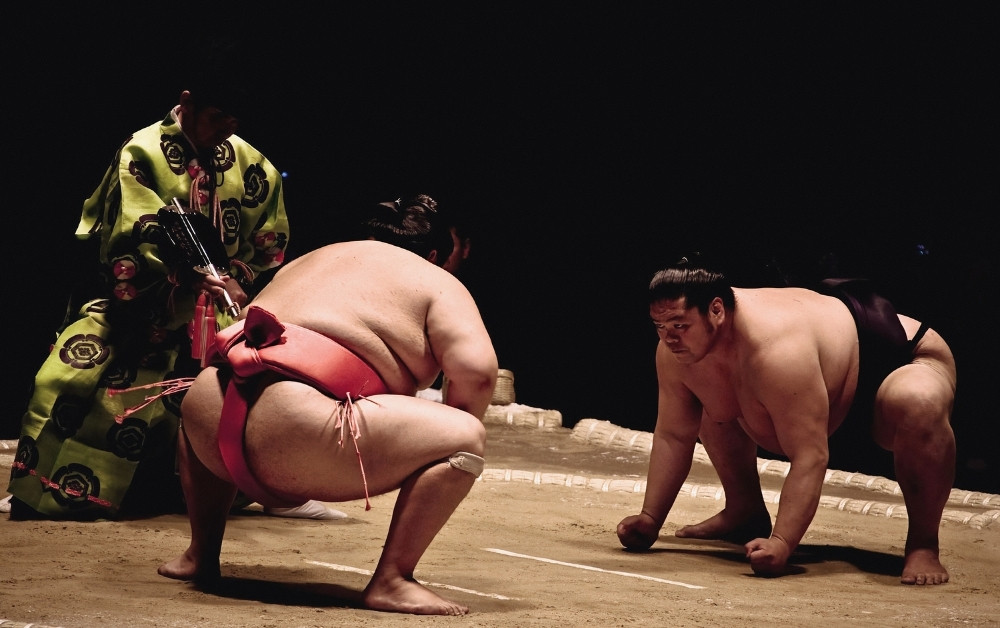
- Venue: EDION Arena Osaka (Osaka Prefectural Gymnasium).
- Dates: March 8th to March 22nd, 2026.
- Access: The arena is a convenient 5-to-10-minute walk from Namba Station.
The 2026 Tournament Landscape
The Japan Sumo Association hosts six grand tournaments (honbasho) annually, each lasting 15 days. The schedule for 2026 includes tournaments in Tokyo (January, May, and September), Osaka (March), Nagoya (July), and Fukuoka (November).The March 2026 Tournament in Osaka is held at the EDION Arena Osaka from March 8th to March 22nd. As of early March 2026, the banzuke (a chart that ranks professional sumo wrestlers based on their tournament results) is topped by Hoshoryu Tomokatsu and Onosato Daiki at the Yokozuna rank. A significant figure to watch is Aonishiki Arata, a Ukrainian-born wrestler who has seen a meteoric rise. After becoming the first Ukrainian to claim the Emperor’s Cup in November 2025 and earning a rapid promotion to Ouzeki, Aonishiki entered the March tournament with the potential to compete for a Yokozuna promotion following back-to-back championship wins.
History and Spiritual Significance of Sumo
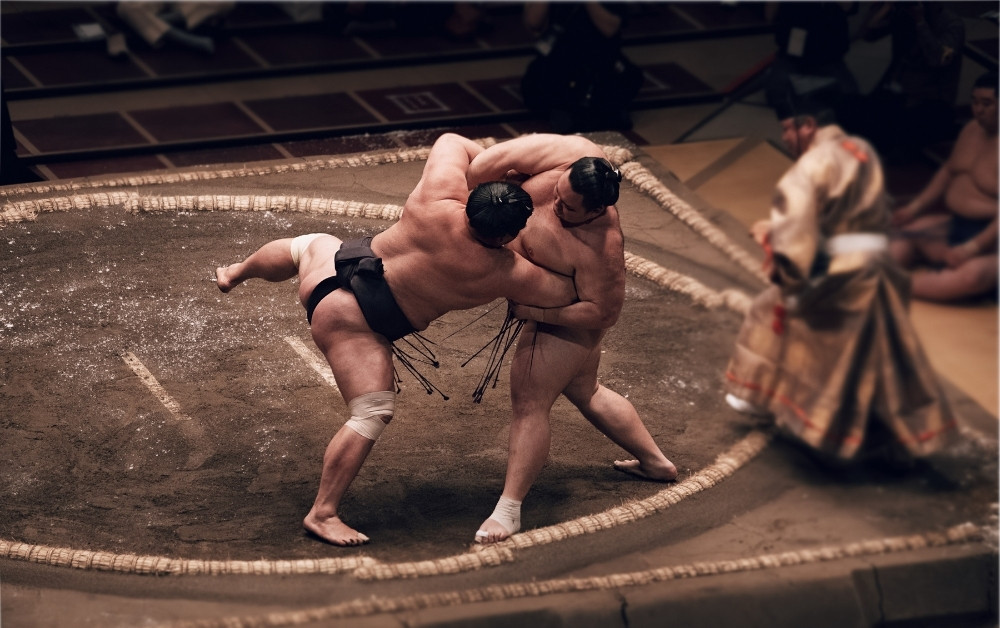
Sumo’s origins can be traced back over 1,500 years, with evidence suggesting its practice as early as the 7th century. Initially, it was not a sport for public entertainment but a sacred performance dedicated to Shinto deities to ensure bountiful harvests. This religious heritage remains visible today through various rituals. For example, the purification of the ring (dohyou) with salt before matches is a practice still strictly followed. The dohyou itself is an elevated ring made of clay and covered in sand, symbolizing sacred ground.
Rules of Sumo Match
The rules of a sumo match are straightforward: the first wrestler (力士, rikishi) to touch the ground outside the ring or to touch the ground with any part of their body other than the soles of their feet loses.
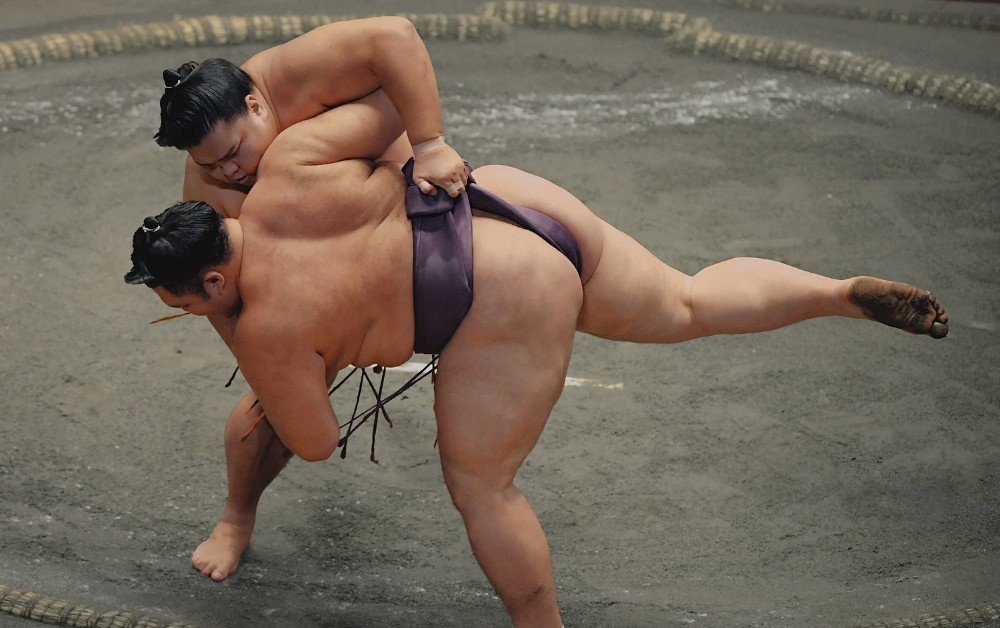
Despite these simple parameters, the sport involves a complex array of throws, pushes, and strategies. Matches are often lightning-fast, typically lasting only a few seconds, though they can occasionally stretch for a minute or more.
Notably, there are no weight classes in professional sumo, meaning a wrestler may find himself facing an opponent twice his size, making weight gain a vital component of training.
The Hierarchy of Ranks (Banzuke)
The professional sumo world is governed by a strict hierarchy known as the banzuke, which is updated after every tournament based on performance. The divisions, from highest to lowest, are:
- Makuuchi: The top division. This division features the highest-ranked wrestlers, including the Yokozuna (Grand Champion), Ouzeki (Champion), Sekiwake, Komusubi, and Maegashira.
- Juuryou: The second-highest division.
- Makushita, Sandanme, Jonidan, and Jonokuchi: The lowest division.
The Yokozuna rank is unique. Unlike other ranks, a Yokozuna cannot be demoted based on poor performance. However, they are expected to retire if they can no longer compete at a high level. Promotion to Yokozuna typically requires winning two consecutive tournaments as an Ouzeki or demonstrating equivalent high-level performance.
Sumo Wrestlers to Watch in 2026
The sumo ranking hierarchy (banzuke) determines the matchups and the prestige of each wrestler. At the pinnacle stands the Yokozuna (Grand Champion), followed by the Ouzeki (Champion). Heading into the March 2026 tournament, all eyes are on Aonishiki Arata. The Ukrainian-born sensation recently made history as the fastest wrestler to reach the rank of Ouzeki since 1958 and won back-to-back championships in late 2025 and January 2026. Other top contenders include the current Yokozuna, Hoshoryu, and Onosato, all of whom are looking to maintain their dominance despite recent injuries.
How to Experience the Tournament
Securing tickets for a Grand Sumo Tournament can be challenging, as they often sell out within hours.
Ticket Information
Advance ticket sales for the 2026 March tournament officially begin on February 7, 2026. You can purchase them through the Official Ticket Oosumo website or at convenience stores like Family Mart.
Guided Tours
For a deeper dive into the rituals and history, consider joining a guided tour. These often include a cultural lecture and reserved seating:
- Klook: Osaka Grand Sumo Tournament Viewing Tour provides S/A/B/D-class seating and English-speaking guides.
- JTB Sunrise Tours offers specialized viewing tours with expert interpreters who explain the nuances of the matches.
- Viator: Sumo and Samurai Culture offers unique access and historical context for travelers.
Other Things to Do in Osaka: Study Japanese
If you want to experience Osaka’s culture, there’s no better way to do it than by studying Japanese. And if you’ve always dreamed of living and studying in Osaka, there are a lot of great Japanese language schools in the city.
For example, Loop International is perfect for students who want to go beyond textbooks. Located conveniently along the Midosuji Line, this school offers a unique learning environment where students are challenged to speak 100% in Japanese.
The curriculum includes lessons on the Kansai dialect and practical communication skills tailored to life in “Japan’s Kitchen”. Beyond the classroom, the school arranges fun cultural activities and extracurricular events, such as jet ski trips and sightseeing across the Kansai region, ensuring you are fully immersed in the local way of life.
You can apply to Loop International here.
Conclusion
Watching the highest-ranked wrestlers enter the ring at 4:00 PM to the roar of “Yoisho!” is an experience you will never forget. Whether you are visiting for the tournament or planning to study in Japan, these traditions offer a profound connection to the heart of the country.
Ready to make Japan your classroom? Check the 2026 Grand Tournament Schedule and start planning your Osaka adventure today!
FAQ
When do doors open for the Osaka tournament?
Generally, doors open at 9:00 AM, with lower-division matches starting shortly after. However, most fans arrive later in the afternoon for the top-tier Makuuchi matches, which begin around 3:00 PM.
What are the different types of seating?
Spectators can choose from ringside seats (the most expensive and close to the action), box seats (traditional Japanese-style floor seating on cushions), or balcony seats (Western-style chair seating).
Can I bring food into the arena?
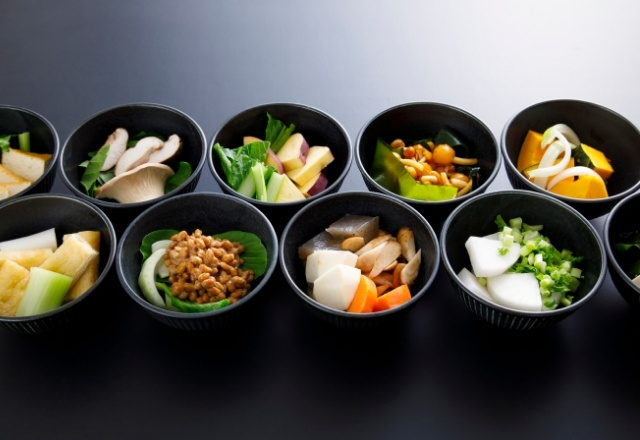
Bringing outside food and alcohol is typically prohibited; however, you can purchase traditional snacks and chanko nabe (sumo hot pot) from vendors inside the venue.