



If you have already had some work experience and want to build a career in Japan, is attending a Japanese language school right for you? The best schools offer a holistic approach that covers practical business conversation skills, rigorous JLPT preparation, and career development services. Unlike typical, basic language schools, a career-focused school offers resume building, interview preparation, and direct networking opportunities.
If your true ambition is to secure a working visa after graduation, it is essential that we help you find a school with a highly accredited curriculum and a proven track record of placing students in good jobs. In this guide, we break down what these top Japanese language schools for career preparation offer, how to evaluate and choose one, and our picks for you ambitious young professionals coming to Japan in 2026.
What Japanese Language Schools For Career Preparation Offer
When deciding on a Japanese language school for working in Japan, there is more to it than simply finding a JLPT N2 preparation school; business Japanese will only get you so far in the eventual job hunt. These top-tier institutions design their curriculum around the specific environment that job hunters will encounter in Japan. Here are three key features that make such schools stand out:
First, a dedicated business Japanese course in Japan will emphasize teaching keigo, or formal business speech. They will teach you how to format emails to Japanese expectations, which are very specific and valued. They will also teach and offer good practice in Japanese workplace etiquette, which will take you far in your future career.
Second, robust job-hunting Japanese language school services include structural career support. This is especially helpful for foreigners, as the traditional job-hunting process in Japan can seem unconventional without guidance. This means you will receive hands-on assistance with the job-hunting process (shuushoku katsudou), such as crafting your Japanese-style resume, called rirekisho.
Third, comprehensive language school career support in Japan involves interview practice. This will cover various aspects of the interview process, such as mock interviews, bowing, and greetings. Many of these schools have long-established connections with local employers and host exclusive job fairs for their students.
Career-Focused Japanese Language Schools vs Other Japanese Language Schools
How is a career-focused Japanese language school different? Don’t they all teach Japanese regardless?
In essence, yes. But regular Japanese language schools often focus on helping students pass the JLPT and move on to higher education, so the curriculum and support differ. Lessons tend to be more textbook-heavy and theory-driven than practical, with fewer conversation activities and more grammar quizzes and homework.
Support matters too. A school centered on university prep has a different network. It might partner with vocational schools (senmon gakko, 専門学校, specialized training colleges) and universities, and know how to help you pass the EJU (Examination for Japanese University Admission for International Students), but have no ties to employers and no program for job hunting.
Finally, there is the demographic. Schools focused on university and the JLPT tend to attract younger students, from 18 (the minimum age to study in Japan) to the early 20s, and many have no work experience. If you already have a university degree or work experience, a career-focused program is likely a better fit, and you will find a stronger community there.
How We Picked the Top Japanese Language Schools for Career Preparation
We evaluated schools based on the presence of the following criteria to guarantee you get the best chance of success in your future!
- JLPT coursework
- Career counseling
- Job placement records
- Partnerships with recruiters/employers
- Location
- Accrediations
- School demographics
1. Coto Japanese Institute

| Category | Details |
|---|---|
| Tuition | ¥1,000,000 |
| JLPT Focus | N5 – N2 |
| Career Support | 1-on-1 counseling, resume/interview help |
| Business Japanese | Practical workplace & advanced business |
| Location | Kokobunji, Tokyo |
| Best For | Expats & professionals wanting practical fluency |
Coto Institute is one of the few Japanese language schools in Japan with a curriculum built entirely around practical, career-focused learning. Opening in 2026, it is a new school from Coto Academy, a respected name in Japanese lessons for residents and expats for over 25 years. The brand-new campus sits in a beautiful Tokyo neighborhood, and the school already holds MEXT accreditation and offers full student visa support. It also has a strong reputation with foreign working professionals. The curriculum centers on practical workplace conversation, so students build business Japanese and work communication skills from day one.
Career support goes further than most: one-on-one career counseling, guidance on employment plans, and hands-on help perfecting a Japanese resume and practicing mock interviews. Students also train in advanced Japanese like keigo (敬語, keigo, honorific language) to handle professional situations with confidence.
Pros: High-value internal networking opportunities, practical conversation focus.
Cons: Location might not be in central Tokyo, but still convenient
2. Toyo Language School (TLS)

| Category | Details |
|---|---|
| Tuition | ¥468,000 every 6 months |
| JLPT Focus | N3 – N1 |
| Career Support | Free official employment placement |
| Business Japanese | Corporate integration |
| Location | Edogawa, Tokyo |
| Best For | Direct job matching and structured tracking |
Tokyo Language School has a unique advantage: it is authorized by Japan’s Ministry of Health, Labor and Welfare to introduce students directly to partner employers. Most schools rely on a third-party middleman for career support. TLS runs its recruitment service in-house, and it is completely free for students. It is delivered through a strict one-year employment preparation course that starts and ends in April, in step with the new-worker start at Japanese companies. On campus, students get a modern lounge and library for studying, relaxing, and meeting classmates, plus an on-site dormitory with extra help finding private housing. Support runs from admission to graduation and beyond, with regular one-on-one progress and goal tracking through MyTeacher, job hunting and career guidance in Japan, and academic pathway support for further education through partner schools. The big draw is a direct one-year path to potential employment.
Pros: Advertises a direct one-year path to potential employment.
Cons: The one-year timeline is very demanding and takes strong commitment.
3. ISI Language School (Harajuku & Shibuya Campus)
| Category | Details |
|---|---|
| Tuition | ¥942,000 per year |
| JLPT Focus | N3 to N1 |
| Career Support | Tailored employment guidance |
| Business Japanese | Specialized career Japanese |
| Location | Takadanobaba and Shibuya, Tokyo |
| Best For | Students wanting a structured, large-scale network |
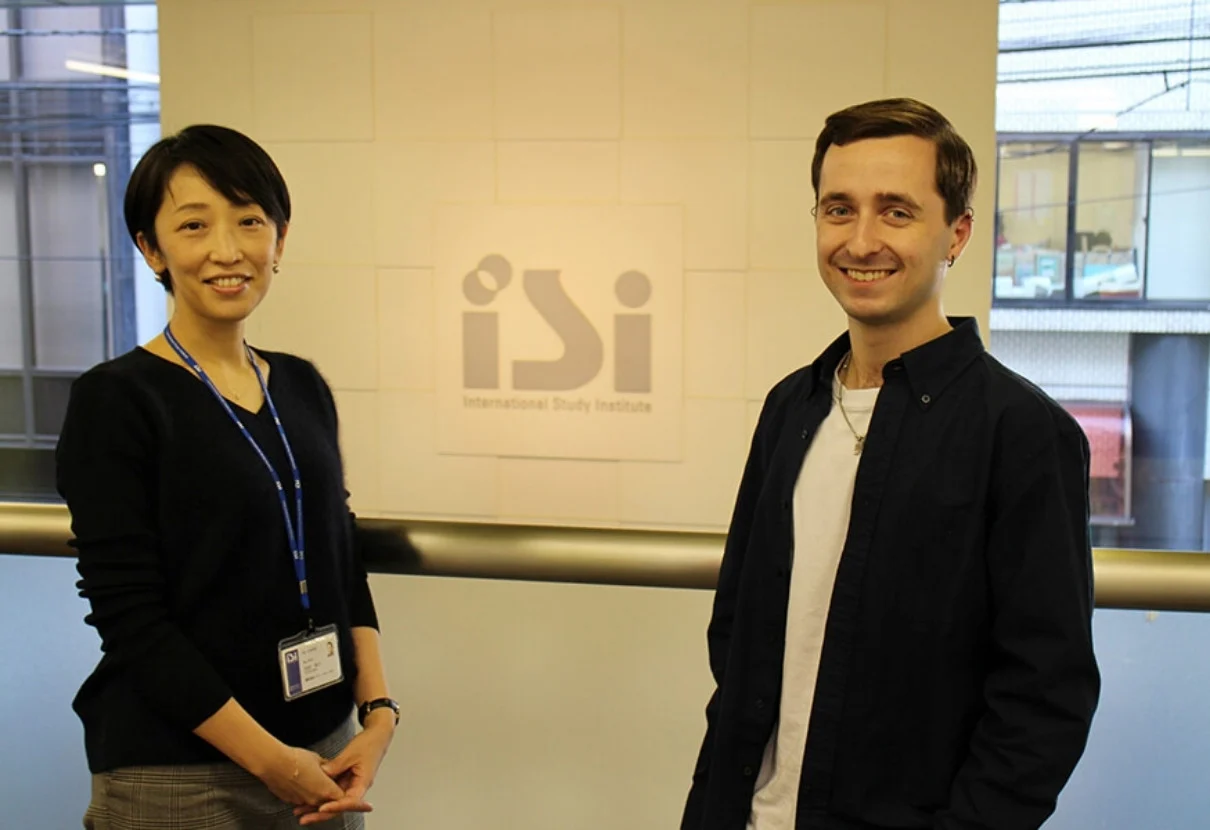
ISI has several campuses, but its two in Shibuya and Harajuku stand out for their two-year career Japanese course. One sits on the quieter north side of Shibuya, and the other is in the middle of the action near Harajuku. The course includes collaborative projects with university students to practice real corporate tasks. Students also get exposure to companies through company visits, job fairs, and internships, with career advisors guiding them through the whole transition from study to work.
Pros: A massive alumni network, with over 10,000 students in 4 major cities annually.
Cons: High student-to-teacher and student-to-counselor ratios, which makes support less personalized.
4. Linguage Japanese Language School
| Category | Details |
|---|---|
| Tuition | ¥858,000 |
| JLPT Focus | N3 to N1 |
| Career Support | Resume reviews, interview practice, manners |
| Business Japanese | Intensive business focus |
| Location | Shinjuku, Tokyo |
| Best For | Fast-paced corporate culture immersion |
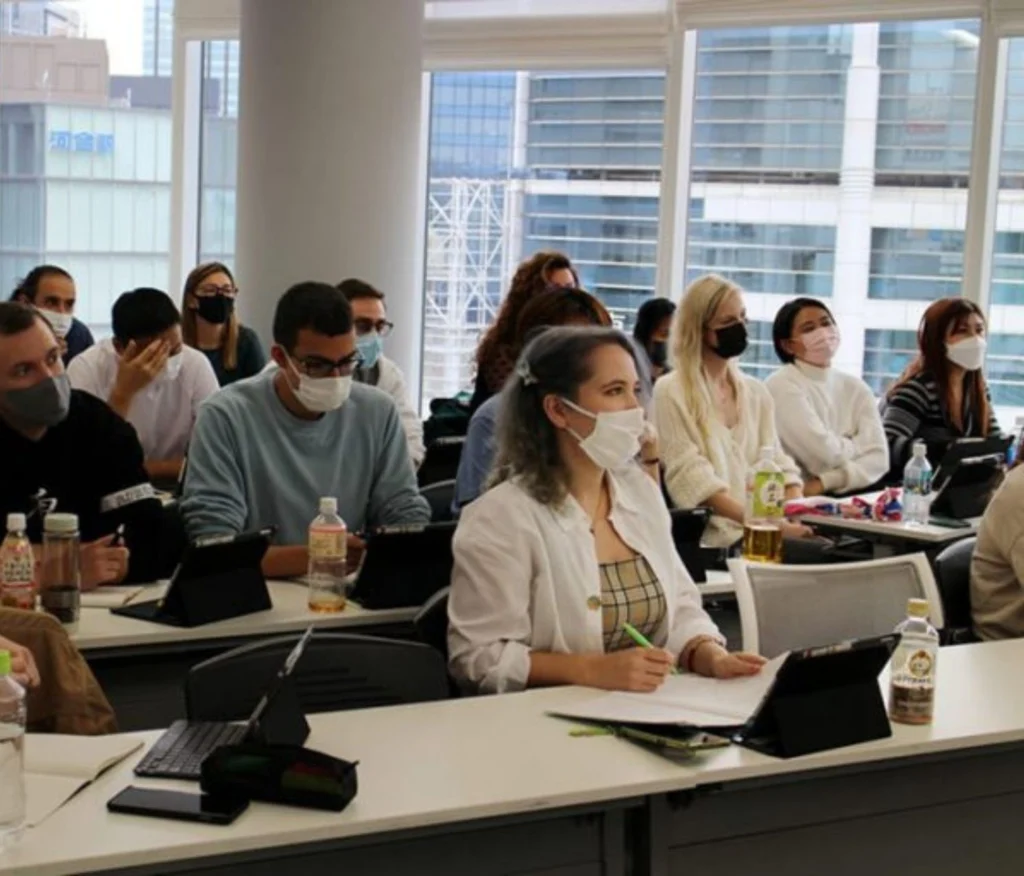
Located in the quieter, business district of Shinjuku, this school specializes in Japanese business preparation. They offer a holistic approach covering polite business manners, business-related kanji, company role-playing, and presentation giving. They of course, offer more practical help too, such as resume perfection, company tours, and practice job interviews to get you into the job you want. If you want to work in IT, check this school out since they have strong connections with local IT firms.
Pros: Great for learning nuances of business culture such as bowing and advanced keigo.
Cons: Their strictness about formal corporate manners may be hard for some to handle daily.
5. Nichibei Kaiwa Gakuin
| Category | Details |
|---|---|
| Category | Details |
| Tutition | ¥956,000 |
| JLPT Focus | N3 to N1 |
| Career Support | Mock interviews, Adecco partnership |
| Business Japanese | Professional, BJT framework |
| Location | Yotsuya, Tokyo |
| Best For | Working professionals and entrepreneurs |
Nichibei’s target audience is mature, working professionals with pre-existing careers. This is one of the best language schools in Japan for career preparation. They cater to this type with business-intensive courses being taught in the evenings and on Saturdays. They offer many career events and seminars, and they even have an official partnership with major recruitment agency Adecco, one of the largest in the world. This is the perfect school for those of you who are looking to advance your existing career in Japan, or transition to a Japanese workplace.
Pros: Entrepreneurial support seminars, strong partnerships.
Cons: The older age classes may be intimidating for fresh college graduates.
6. Kobe Electronics College
| Category | Details |
|---|---|
| Tutition | ¥800,000 |
| JLPT Focus | N2 to N1 |
| Career Support | Career center guidance, web tests |
| Business Japanese | Technical & general business |
| Location | Chuo, Kobe |
| Best For | IT and engineering-focused language learners |
This is a Japanese engineering university in Kobe, which also offers Japanese language courses for foreigners. These courses aim for JLPT N1 through a two-year program and JLPT N2 through a one-and-a-half-year program. The acceptance requirement is JLPT N5. They offer basic university career support, such as job-hunting and internship workshops, as well as prep for company entrance exams. This is a great idea if you want to get into the IT or engineering workforce, especially with their connections in Kansai.
Pros: Great connections and preparation for engineering, IT, and electronics industries.
Cons: The curriculum leans heavily toward the engineering field rather than general business.
JLPT Levels That Employers Expect
When applying for jobs in Japan, the language proficiency filter is generally one of the first to be applied. What they are screening for is generally JLPT N2, if it isn’t native exclusive. The JLPT is the gold standard when it comes to measuring language proficiency in Japan, with its standards being used by the government as well as nearly every company. N2 means that you can fully understand daily spoken Japanese, and some degree of variety. If you are unfamiliar, don’t worry; we have a comprehensive guide.
On rare occasions, N3 is accepted if you are otherwise extraordinarily qualified, or if the job is a back-of-house service sector role. For specialized, client-facing, or consulting roles, JLPT N1 is usually expected.
What to Ask a Japanese Language School Before Enrolling for Career Preparation
Before you commit time and money to any Japanese language school for career preparation, make sure its career support claims are more than flimsy marketing. Try these questions when you call:
- “Are you accredited by MEXT to sponsor student visas?” (Essential for long-term study and transition to a work visa).
- “Do you have dedicated career counselors on staff?”
- “Can you provide recent employment placement rates or examples of companies where alumni work?”
- “Is business Japanese integrated into the main curriculum, or is it an extra elective?”
- “Do you offer direct introductions to partner recruitment agencies?”
Conclusion
Securing a job in Japan is a very competitive process, but rest assured, speaking English already makes you stand out from the rest of the applicants. However, cultural and language proficiency is a requirement that is held to a very high standard. You could go to any basic language school, or you could go to a Japanese language school for working in Japan. This would make a world of difference and set you up for success in ways you wouldn’t otherwise know. You would be prepared with work etiquette know-how, formal business grammar, and the Japanese-style resume required to apply.
Ready to Live and Study in Japan?
With so many options available, choosing the right program can feel overwhelming. Coto School Finder is a free matching service that works with a variety of trusted language schools, helping you compare programs and guiding you through the student visa and application steps. With no agent fees and personalized support, we can make your dream of building a career in Japan a reality. Contact Coto School Finder today!
FAQ
Which JLPT level do I need to work in Japan?
N2 is the most common requirement employers in Japan set for business roles.
Do language schools help with job hunting?
Yes, career-focused language schools provide dedicated job-hunting support.
Is business Japanese taught at language schools?
Top language schools offer specific business Japanese courses. These classes go beyond standard vocabulary to teach formal honorifics (keigo), business email etiquette, telephone manners, and Japanese corporate culture, ensuring you are fully prepared for the workplace environment.
Can I switch from a student visa to a work visa?
Yes, you can switch from a student visa to a standard work visa in Japan once you secure a valid job offer from a Japanese company.
How long should I study before job hunting?
If starting from a beginner level, it generally takes 1.5 to 2 years of intensive study to reach the JLPT N2 level required for most jobs. Start job hunting 6 months before graduation.