


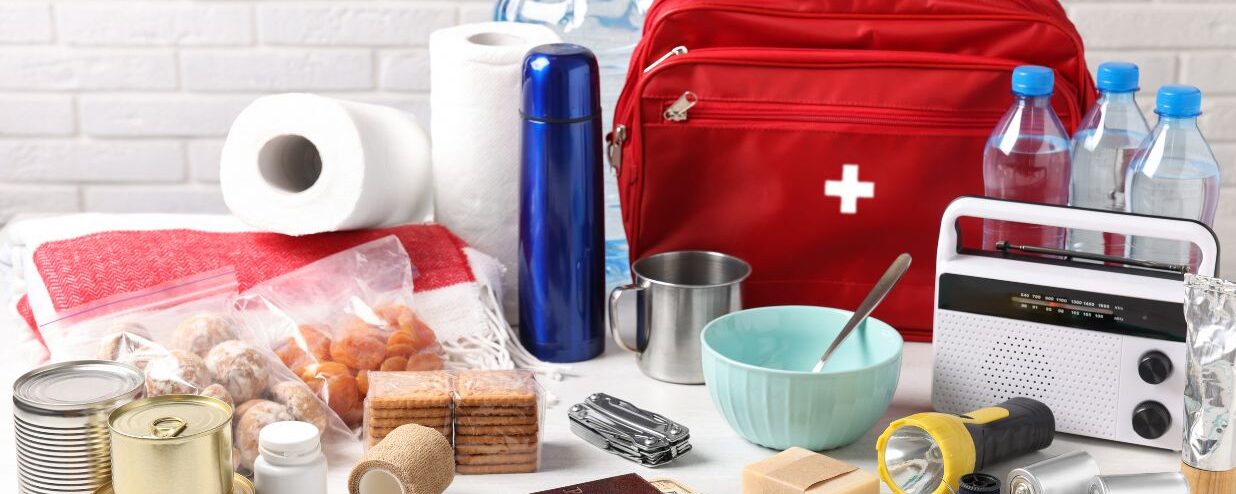

Moving to Japan can be anxiety-inducing for those who are inexperienced with nature’s might. Japan is naturally prone to earthquakes, tsunamis, typhoons, and heavy rain. In fact, natural disasters in Japan are so common that the Japanese government officially advises you to prepare an emergency kit, or a disaster preparation kit.
This is not to dissuade you from making the leap; quite the opposite. This is to reassure you that you can be prepared for anything if you follow our advice! We have a disaster readiness practical guide for you, new or soon-to-be residents.
We will cover what to pack, why each item matters, and where to buy it in Japan. As a common practice, every household should have its own emergency bags, which you can also find pre-packed at home goods stores.
Why You Need a Disaster Kit in Japan
As mentioned, Japan frequently faces a wide range of natural disasters, and earthquakes are among the most common. On average, Japan experiences around 1,062 earthquakes per year, or about 88 per month, meaning a quake hits somewhere near Japan roughly every 8 hours. Most of these amount to nothing major, but because earthquakes are unpredictable, it’s important to be ready at a moment’s notice. There are two typical responses to a serious emergency: evacuate or shelter in place.
For this reason, government agencies suggest keeping a grab-and-go bag (持ち出し袋, mochidashi-bukuro) and a stockpile of essential goods (必要な備蓄品, hitsuyou na bichikuhin).
Types of Emergency Kits in Japan
It’s important to understand that there are technically two types of emergency kits for disaster preparation.
The first is called a grab-and-go bag, a kit filled with essential items designed to be taken with you when you leave your home (for example, to an evacuation site). In a natural disaster, it’s important to have this bag ready in advance. Pack these items in something like a knapsack, and keep it near the front entrance or in the bedroom, car, or shed, so you can grab it and go even if your house has collapsed.
The second isn’t exactly a “kit,” but more of an at-home stockpile for when you are stuck at home. If a major disaster strikes and disrupts infrastructure, even the authorities may struggle to respond quickly. That’s why you should keep enough supplies to live without relying on anyone else for at least a week, until relief arrives. This is the idea behind emergency stockpiling.
You don’t need to buy anything special. Simply buy a little more of the food and daily items you already use, and rotate through them in the order you bought them, using older stock first and replacing it as you go.
What to Pack For Your Disaster Kit in Japan: Emergency Kit Checklist
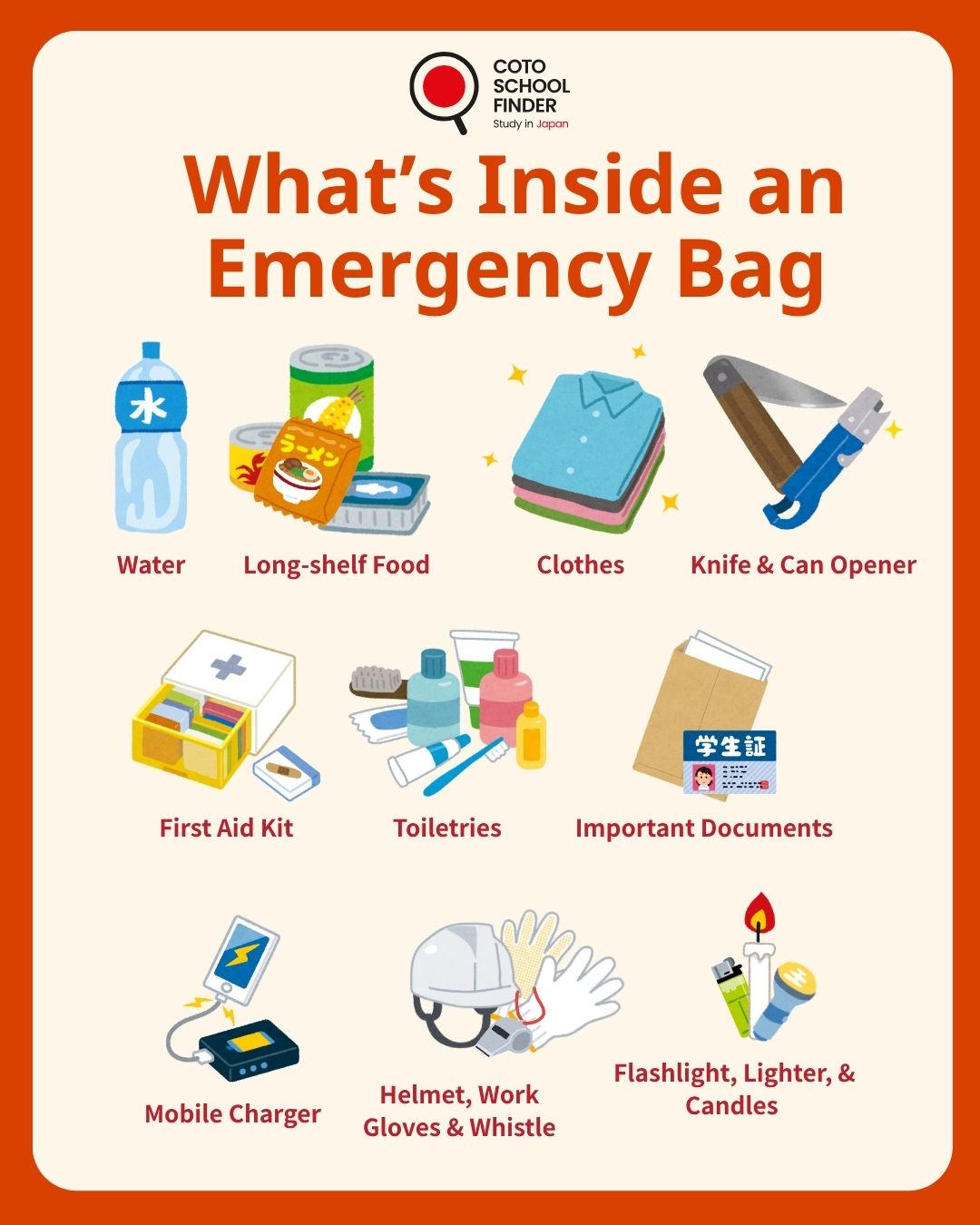
The following advice is a list for adults. Please note that babies, the elderly, and people with allergies may need different items.
| Category | 持ち出し袋 (Grab-and-Go) | 必要な備蓄品 (At-Home Stockpile) |
|---|---|---|
| Water | 1 to 2 liters of water, or up to four 500ML bottles so that it isn’t too heavy to carry. | Keep a minimum of 3 days, but preferably 1 week’s worth per person. The recommendation is 3 liters per person per day. |
| Food | Keep alpha rice, retort pouch foods, biscuits, chocolate, hardtack, etc.; prepare at least 3 days’ worth. | Maintain an assortment of about 7 kinds of shelf-stable, ready-to-eat food, each a week’s worth. |
| Light and Power | Flashlight (Hand-cranked type is convenient), Portable radio (Hand-cranked type is convenient), Spare batteries / Portable charger, Matches / Candles | Set of AA, D, and AAA batteries, Long-style candle lighter, Portable gas stove, cassette gas canisters, Mobile phone chargers, LED lanterns, Headlight |
| First Aid and Medication | Band-aids, Bandages, Disinfectant, Regular medicine | Complete first aid kit, Duct tape, Multitool |
| Important Documents | Bankbook, Cash, Passport, Driver’s license, Hospital consultation ticket, My Number card | (Keep these securely stored but easy to grab to add to your go-bag if evacuating) |
| Hygiene and Comfort | Disposable heating pads, Blanket, Work gloves, Toiletries, Toothbrush / Toothpaste, Towel | Disinfectant wet wipes: 70 sheets, Alcohol spray: 1 bottle, Masks: 7 pieces, Regular medicines: 1 box each, Disposable contact lenses: 1 month supply per person, Portable toilet/emergency toilet: 35 uses, Toothbrushing wet wipes: Approximately 70 sheets, Wet body towels: 7 pieces |
Water and Food
For water, the most important thing for your at-home stockpile is to keep a minimum of 3 days of water per person. One person drinks around 3 liters per day (as a recommendation).
For example, if you live with 3 other family members, you should prepare around 36 liters of water.
Your grab-and-go bag, since it is meant to be more mobile, should have one or two bottles of water and a few instant snacks.
Light and Power
Your go-bag should have the following items, as electricity will be unavailable immediately following a major disaster.
- Flashlight (Hand-cranked type is convenient)
- Portable radio (Hand-cranked type is convenient)
- Spare batteries / Portable charger
- Matches / Candles
For the at-home stockpile, also consider the following:
- Set of AA, D, and AAA batteries
- Long-style candle lighter
- Portable gas stove
- Cassette gas canisters
- Mobile phone chargers
- LED lanterns
- Headlight
First Aid and Medication
The following are necessities for your go-bag to self-treat possible wounds.
- Band-aids
- Bandages
- Disinfectant
- Regular medicine
For the at-home stockpile, also consider the following:
- Complete first aid kit
- Duct tape
- Multitool
Important Documents
In general, we always recommend that you put all important documents in one place so they can easily be taken together. Some of these things, such as your driver’s license and your My Number Card, should already be in your wallet anyway if you are a foreign resident living in Japan.
- Bankbook
- Cash
- Passport
- Driver’s license
- Hospital consultation ticket
- My Number card
Hygiene and Comfort
You should have the following in your go-bag.
- Disposable heating pads
- Blanket
- Work gloves
- Toiletries
- Toothbrush / Toothpaste
- Towel
These items are recommended for your individual at-home stockpile.
- Disinfectant wet wipes: 70 sheets
- Alcohol spray: 1 bottle
- Masks: 7 pieces
- Regular medicines: 1 box each
- Disposable contact lenses: 1 month supply per person
- Portable toilet/emergency toilet: 35 uses
- Toothbrushing wet wipes: Approximately 70 sheets
- Wet body towels: 7 pieces
Where Should You Put Your Emergency Kit?
One thing the Japanese government recommends is preparing three grab-and-go bags at different locations.
1. Emergency Bag to Keep at Home
Keep a home bag in a safe, easily reachable place. For example, if you usually leave through the genkan, keep it there. If you leave via the garage, keep it there instead. The idea is to place it somewhere that makes sense and follows your actual path when leaving the house.
2. Emergency Bag to Keep at the Workplace
The Japanese government also recommends keeping an emergency kit at your workplace, since disasters can strike during the day while you’re at the office, and there’s a chance you could be stuck there for a night or two. For example, a severe typhoon or major flooding could halt public transportation, and if no accommodation is available, you might have no choice but to stay at the office.
Recommended items:
- Comfortable shoes
- Helmet
- Emergency food
- Light sleeping bag
- First-aid kit
- Work gloves
- Water bottle
- Emergency toilet
- Raincoat
3. Emergency Kit to Be Carried Around
This is a more compact, portable bag you can carry with you or keep in the trunk of your car, containing only the bare essentials.
The Tokyo government recommends the following items:
- Portable radio
- Light
- Battery
- Mobile phone charger
- Toothbrush
- Emergency toilet
- Whistle
- Coins
- Emergency set/blanket
- Map
- Water bottle
Communication and Safety Apps
Setting up a disaster communication app is paramount to staying safe in Japan. Although the official emergency broadcast, J-Alert, will alert your phone through cell towers, if you are not proficient in Japanese, you need something supplementary. Here are our recommendations to help you stay informed when disaster strikes.
1. NERV Disaster Prevention
NERV Disaster Prevention delivers real-time, rapid alerts for disasters and severe weather risks, with multilingual support so you’re never left guessing what’s happening. You can register up to three locations to receive alerts for, and since it’s directly connected to the Japan Meteorological Agency, you can trust the information is accurate and timely.
2. Safety Tips
Safety Tips provides location-specific evacuation orders and shelter locations, along with a foreigner-friendly hospital locator to help you find medical care when you need it most. The app supports over a dozen languages and includes helpful phrases for emergencies, making it especially useful if you’re still building your Japanese skills.
3. Japan Shelter Guide (全国避難所ガイド)
Japan Shelter Guide helps you find your nearest evacuation shelter, medical facility, and water supply, and it even monitors the live congestion status of evacuation shelters so you know what to expect before you arrive. It also displays hazard maps for areas prone to landslides, flooding, and other risks. The app itself is in Japanese, but a built-in translate button makes it accessible even if you don’t read the language.
Where to Buy a Kit or the Individual Items in Japan
As mentioned, you can buy these items as a prepared backpack kit (防災セット) if you are spooked by recent events and want something immediately. There are many places to buy prepared kits for different individual needs such as:
- Amazon (many options)
- Rakuten (many options)
- Tokyu Hands (premium)
- Loft (premium)
- Muji (designed with their minimalist aesthetic)
- Aeon (basic)
- Ito-Yokado (basic)
If you have the time to gather your own 持ち出し袋 and 必要な備蓄品, we suggest starting at cheaper places such as 100-yen shops for the basics, supermarkets for bulk non-perishable food, and home goods stores for water jugs and survival/camping gear. Here are some good stores:
- Daiso, Seria, CanDo (100-yen shops)
- Gyomu Super, OK Store (cheapest supermarkets)
- Cainz, Kohnan (discount home goods stores)
- Costco (has bulk foods and pre-made kits)
Maintaining Your Emergency Kit in Japan
The most common mistake made when it comes to stocking disaster foods is forgetting about them. Shelf-stable foods still have an expiration date, even if it is several years out. The best method for addressing this is with the rolling stock method. Buy items that you actually like, and keep an eye out for expiration dates, so you can eat and replace them before they become a waste.
For the grab-and-go bags, the general consensus is to check twice a year. First on March 11, the anniversary of the Tohoku earthquake, and once on Disaster Prevention Day, September 1. Please be careful to check the following:
- Expiration: dates for water, medicine, and food
- Power: batteries, flashlights, and radio
- Clothing: make sure emergency clothes are season-appropriate
Conclusion
The idea is to be prepared for anything, not to be scared of anything. Following our friendly advice will put you in the best possible position if disaster ever strikes. Gathering these sorts of kits is just one necessary part of settling into life in Japan. If you want more advice on settling into Japan, such as how to get a part-time job or the cost of living as a student, trust us, we have been in your shoes before.
Want to Live and Study in Japan?
Preparing for daily life in Japan goes beyond emergency kits and disaster apps; it also means finding the right school to support your journey. Coto School Finder helps you navigate your options and find a program that fits your goals, so you can focus on settling in with confidence. Contact Coto School Finder today to get started.
FAQ
How much water should I store per person in Japan?
3 liters per person per day, 3 days minimum in the home stockpile.
What is a mochidashi bukuro?
A grab-and-go bag of emergency supplies meant for evacuation situations.
Do convenience stores sell emergency kits in Japan?
Rarely. Large supermarkets with home goods sections are your best bet for convenience.
What should I do if I don't have a kit during an earthquake?
Find designated local evacuation centers such as an elementary school or community center.
Are pre-made disaster kits worth buying in Japan?
If you want to save money and space, a DIY kit is recommended. However, it is better to get caught with it than without it.
Related Article: